Every college football fan in the 80’s remembers the Pony Express. They remember the confusion when a small school in Dallas began beating the biggest programs in the country for five star recruits. They remember the shock of watching SMU dominate No. 2 Texas in Austin with their stingy defense and ferocious ground attack. But what they remember the most was the legendary downfall of SMU football after it was discovered that the Mustangs were illegally paying players and recruits and had been for years.
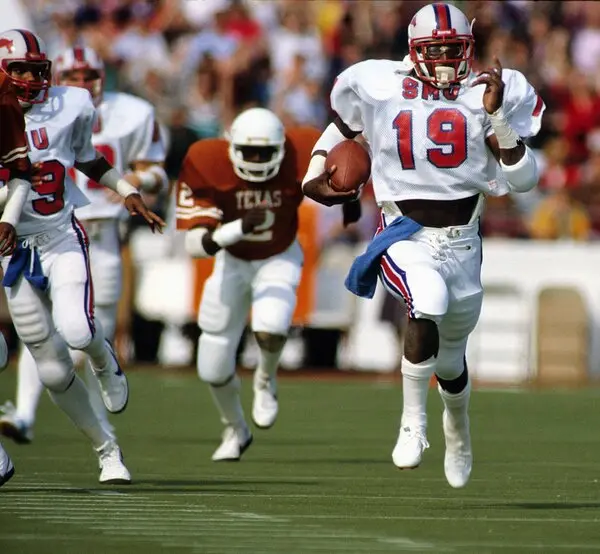
Because of this, the Mustangs were given the death penalty, and for decades afterwards the program lived in the basement of the college football world.
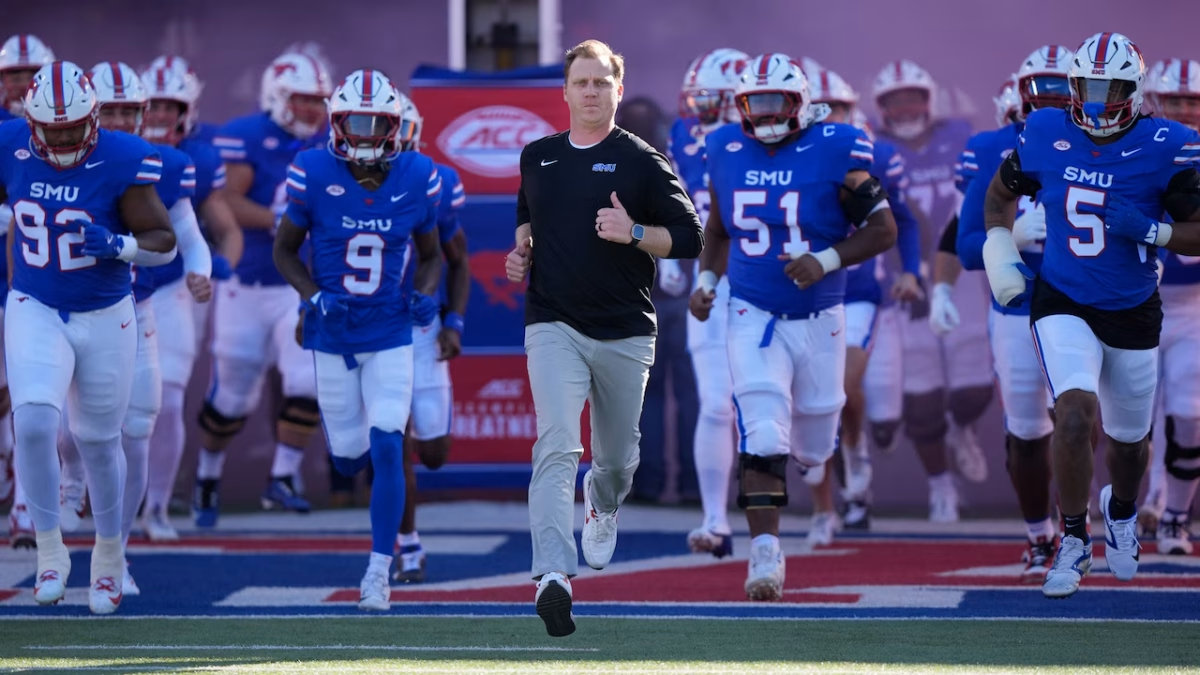
Fast forward thirty nine years after that fateful day when the Mustangs were given the death penalty, and, for lack of a better way to explain it, they’re back. June Jones, hired in 2008, got the ball rolling by delivering on some long awaited winning seasons. Sonny Dykes, before bolting for rival TCU, had several winning seasons, but fielded teams that were not competitive against power four opponents and tended to collapse down the stretch. Enter Rhett Lashlee, the current head coach at SMU and the master architect of the Mustangs’ resurgence. After two years as SMU’s offensive coordinator, Lashlee spent two seasons with Miami before returning to take over at SMU. Though many may not realize it, SMU owes much of its success to Lashlee’s time in Miami, where his recruiting philosophy was formed. In the college football world, most of the elite teams are fielded by large public schools backed by an entire state’s worth of resources. The three major exceptions to this are Notre Dame, USC, and Miami. While Notre Dame and USC have been dominant since the 1920’s and have used that blue blood status to perpetuate their college football prestige, Miami is the lone private school to build themselves into a power in the modern age. Miami did this by aggressively recruiting the Miami Metropolitan area, or the “State of Miami,” and by committing egregious recruiting violations that led to several scandals (as noted above, SMU tried their hand at the second method in the 80’s, but has since decided to move in a different direction). Lashlee clearly took notes during his time at Miami, and while he is also an active transfer portal recruiter, the core of what he is trying to build sits in the high schools in and around the city of Dallas. Some of SMU’s best players from the past several years have been Dallas, most notably star quarterback Kevin Jennings,
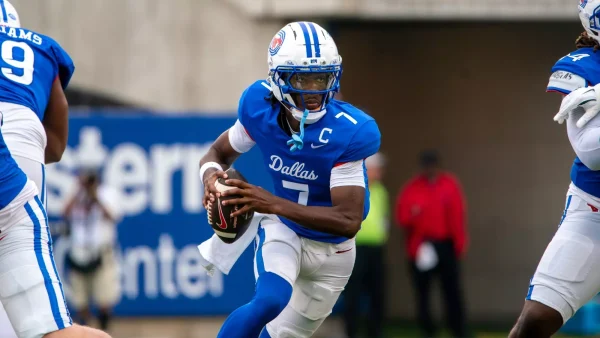
who is a product of Texas 5A juggernaut South Oak Cliff. By attempting to build a program through high school recruiting, Lashlee has taken a gamble, as the transfer portal has made recruiting very unpredictable, but SMU has been very successful in retaining impact players, and if they continue to build, many more playoff berths and maybe even a National Championship lay in their future.