For many students, getting into their dream school feels like the ultimate goal. Years of hard work and pressure often create the belief that acceptance into a highly selective college will be the key factor in defining future success. When that acceptance doesn’t come, it can feel like everything has fallen apart. In reality, getting into your dream school is not the end all be all.
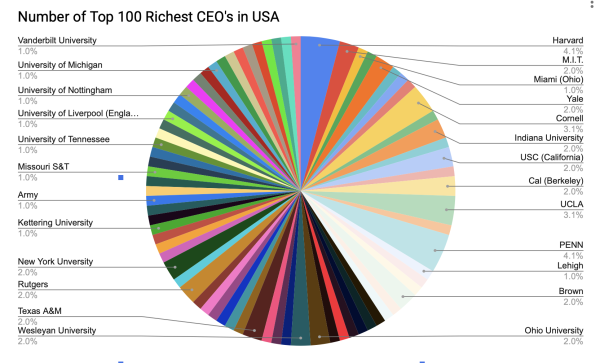
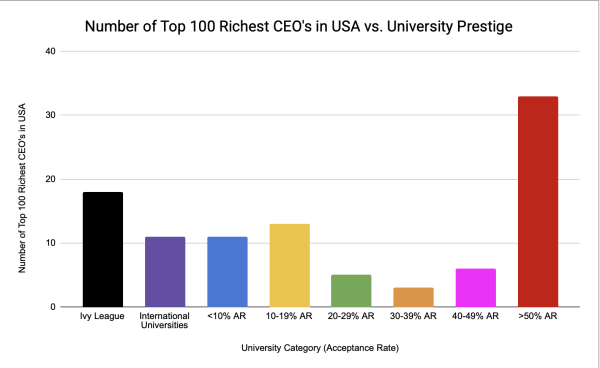
Students are constantly surrounded by rankings, acceptance rates, and prestige, reinforcing the idea that elite schools are the only path to success. However, real world outcomes tell a different story. As shown in the graphs in this article, over 30% of the current top 100 richest CEOs in the United States either attended a college or university with an acceptance rate above 50% or did not attend college at all. This data directly challenges the assumption that acceptance from an elite school is a requirement for extraordinary success.
What matters far more than the name of a school is what students do once they get there, as well as what they do after they leave. Skills such as leadership, endurance, and creativity can be developed at nearly any college. Many successful CEOs built their careers through persistence, risk taking, and learning from failure, not simply through prestigious degrees.
 In fact, schools with higher acceptance rates often provide unique advantages, including smaller class sizes, greater access to professors, and more leadership opportunities. These experiences can allow students to stand out and gain practical skills that are just as valuable as a school’s reputation.
The intense focus on dream schools can also harm students’ sense of self worth. There are often many pressures and expectations that come with college admissions, but remembering that it is possible to succeed at any school will help you along the way. College admissions decisions are influenced by many factors beyond individual ability, and potential rejection is not a measure of intelligence or potential. A different college path does not mean a worse future.
While attending a prestigious university can offer benefits, it is not the only route to success. College is just one chapter in a much larger story. Ultimately, long term success depends on effort, growth, and how individuals use the opportunities available to them no matter where they start.